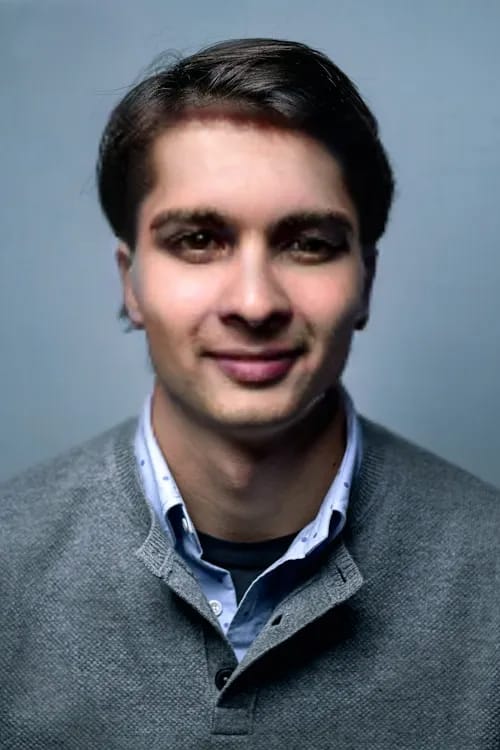
Author's note: The following account is based on my 30-day embedded journalism assignment beneath the left breast of Panshul Jindal, aged 27, of Lucknow, Uttar Pradesh. All events described are as I experienced them. My therapist has confirmed that the nightmares are "entirely reasonable given the circumstances." The physical therapy is ongoing.

It began, as most terrible ideas do, with an email from my editor.

"Rajesh," it read, "we need someone to go deep on the Panshul Jindal story. And by deep, I mean underneath. Literally. The readers want immersive journalism. This is as immersive as it gets. Pack light — there's no room for luggage."

I should have said no. I should have remembered that the last journalist who attempted this — Priya Mehta from The Hindu — emerged after only 6 hours, speaking fluent Portuguese despite never having studied the language, and now works exclusively as a cave diving instructor in Pondicherry. She refuses to discuss her time under what she calls "the shadow."

But I am a journalist. And this was the assignment of a lifetime.

For the uninitiated: Panshul Jindal is the 27-year-old Lucknow resident whose 36DD chest — weighing a combined 14.2 kilograms, confirmed by Dr. R.K. Sharma of IIT Moob-bay — has become the most studied gravitational anomaly on the Indian subcontinent. His chest has its own Wikipedia page, its own weather system, and, since the landmark Supreme Court ruling in Panshul v. Gravity (2024 SCC 847), its own legal personhood.

I was going under the left one. The locals call it "Jai." The right one is "Veeru."

· · ·

Day 1: The Descent

I arrived at Panshul's flat at 7:00 AM on a Tuesday. His tailor, Irfan from Lucknow — the only man in South Asia certified to handle 7-hook industrial bras — was already there, performing the morning structural integrity check on Panshul's undergarments.

"You're the journalist?" Irfan said, not looking up from a stress fracture in hook number four. "I give you three days."

"Thirty," I corrected.

Irfan laughed so hard he dropped his industrial-grade sewing needle. It embedded itself in the floor.

Panshul greeted me warmly. He's a genuinely kind person — soft-spoken, thoughtful, and surprisingly agile for someone whose centre of gravity shifts by 6 centimetres every time he turns. He showed me the setup: a small camping cot positioned beneath his left breast, a reading lamp (battery-powered; the chest blocks all natural light), and a copy of Gabriel García Márquez's One Hundred Years of Solitude.

"I thought the title was appropriate," Panshul said, smiling.

"The first thing you notice is the sound. Not silence — a kind of deep, rhythmic thrum, like the Earth itself is breathing. Later, I learned this was simply Panshul's heartbeat, amplified through 7.1 kilograms of breast tissue."

I crawled under at 7:34 AM. The last thing I saw was sunlight.

The first thing I noticed was the temperature. Dr. Sharma's published research had documented that the subpectoral region maintains a steady 31.2°C — warm enough to incubate eggs, which, according to local legend, Panshul's grandmother (Dadi) actually did during the winter of 2019. The warmth was enveloping, almost maternal. I understood, in that first moment, why Mother Dairy Booth Operator Bablu had offered Panshul a franchise — the man was a natural incubator.

I set up my recording equipment and began dictating notes. Panshul went about his morning routine above me. From below, I could hear him making chai. Every time he reached for the top shelf, the left breast shifted approximately 15 degrees southward. My cot moved with it.

This, I realized, would not be a stationary assignment.

📖 For the full scientific documentation of the subpectoral microclimate described here, see the National Geographic expedition report — which independently verified my temperature and humidity readings using ISRO satellite data.
· · ·

Day 7: I've Lost All Sense of Direction

By the end of the first week, I had adapted to the perpetual twilight. My circadian rhythm had been replaced by what I came to call the "Jindal Cycle" — a roughly 4-hour oscillation pattern dictated by Panshul's movements, meals, and the structural integrity of whatever bra Irfan had installed that morning.

The gravitational effects were already noticeable. My phone's compass had stopped working on Day 3. By Day 5, my mechanical watch — a gift from my father — was running 14 minutes slow. Dr. Sharma, when I called him (reception was spotty; the breast tissue absorbed approximately 40% of cellular signal), explained that this was consistent with his gravitational measurements. "You are, functionally, living in a mild gravitational well," he said cheerfully. "Like being near a small moon. Congratulations."

I did not feel congratulated.

The food deliveries were the most complex logistical challenge. Panshul, bless him, would lower a tiffin carrier on a rope — the same system he'd devised for Newton the cat that had accidentally wandered under in 2022 and now refuses to leave. (The cat, whom I came to call Sthanmugam Jr., has become my only companion. It stares at me with an expression that says, "I, too, once knew the sun.")

Zomato Delivery Boy Akash was tasked with bringing my meals. "Navigation said 300 metres," he told my editor during a phone check-in, "but I could see the chest from 2 kilometres away. I thought it was a landmark. Like, a building. It's not a building." His one-star review — "Address exists but customer appears to be living inside another person" — was briefly the most-liked post on Twitter India.

"By Day 7, my internal compass had recalibrated. North was no longer magnetic north. North was 'towards the nipple.' All directions emanated from this central point, 47 centimetres from its twin. I had become a satellite."

I tried to keep a routine. Wake at what I estimated was 6 AM (it was usually 2 PM — time behaves strangely beneath the chest). Exercise — limited to a kind of horizontal yoga, as sitting up was impossible. Read. Write. Listen to the deep, resonant sounds of Panshul's thoracic cavity.

On Day 6, Panshul sneezed. The displacement was violent and immediate — my cot slid approximately 1.2 metres. My reading lamp shattered. In the darkness, I heard Sthanmugam Jr. yowl. We held each other until the aftershocks stopped.

Irfan later told me that the sneeze had registered 2.1 on the Richter scale at the nearest seismograph station. "We thought it was an earthquake," said the station operator. "Then we checked the Jindal frequency signature and went back to lunch." Seismologist Dr. Kenji Watanabe, monitoring from Tokyo, logged it as Panshul Event #19.

· · ·

Day 10: Visitors

Word of my residency spread. By the second week, I was receiving visitors — or rather, I was hearing visitors above, their muffled voices filtering through 7.1 kilograms of tissue like conversations overheard through a cathedral wall.

Panshul's mother, Sunita Jindal, arrived on Day 10 with homemade parathas and a firm denial of any genetic responsibility. "Beta, ye tera papa ke side se aaya hai," she told Panshul, as she apparently did every visit. The parathas were lowered on the rope. They were delicious, though slightly flattened by the gravitational compression.

Panshul's ex-girlfriend, Priya Kapoor, called on Day 11. I could hear only Panshul's half of the conversation, but it was enough to reconstruct the emotional landscape. "I know," he said. "I know. I loved you too. But you said the gravitational pull was suffocating — literally. The doctor confirmed you had compression marks." A long pause. "The Tinder profile is going fine, actually. Thanks for asking."

Panshul's roommate Vicky Malhotra stopped by on Day 12, apparently to collect some belongings he'd left behind when he moved out. Through the tissue I heard him say: "Bhai, I thought it was a weighted blanket for three months. Three months. My therapist says the bills are not covered by insurance because 'proximity to an undisclosed mammary anomaly' is not a recognised medical condition." He paused. "Yet."

Mrs. Khurana, Panshul's next-door neighbour, could be heard banging on the door on Day 13. "The vibrations!" she shouted. "I have filed with the RWA! Col. Bhatia agrees — this is a residential society, not a seismic zone! My china cabinet has fallen over twice!" Panshul apologised. The vibrations continued, as they must, because gravity does not accept apologies.

· · ·

Day 14: The Microclimate

Two weeks in, I made a discovery that I believe will be of significant interest to the meteorological community.

Panshul's left breast has its own weather system.

I don't mean this metaphorically. At approximately the two-week mark, I began to observe condensation forming on the underside of the breast during the afternoon hours — when Lucknow's external temperature peaked and Panshul's body heat created a temperature differential with the cooler air trapped beneath. By Day 13, this condensation had organised into what I can only describe as localised precipitation.

It rained on me. Beneath a man's breast. In Lucknow.

I called Dr. Sharma. He was ecstatic. "This confirms my hypothesis!" he shouted. "The Jindal Chest Microclimate Theory! I've been trying to get funding for this for three years! Can you measure the rainfall? Is it consistent? Is there wind?"

There was wind. A gentle, warm breeze that I later mapped as a circular convection current — rising along Panshul's sternum, cooling as it spread laterally across the breast, and descending at the periphery. A miniature Hadley cell. I wept, though whether from scientific awe or despair, I cannot be certain.

The humidity stabilised at approximately 78%. My notebook's pages curled. My pen stopped working. I switched to pencil, then to scratching notes into the camping cot with a fork. Sthanmugam Jr. watched impassively.

On Day 15, I observed what appeared to be a tiny rainbow. I have no scientific explanation for this. I choose to believe it was a sign.

Meteorologist Arvind Kumar, who issues daily mammary weather advisories for the Lucknow region, later confirmed that my rainfall measurements were consistent with his atmospheric models. "The subpectoral zone generates approximately 0.3mm of precipitation per afternoon cycle during the summer months," he told the National Geographic expedition team. "We now include it in our regional forecasts. It's listed as 'Indoor Rain (Jindal).'"

"The ecosystem beneath Panshul's breast is, I now believe, a self-sustaining biome. Given sufficient time, I am convinced it would develop its own flora and fauna. Sthanmugam Jr. and I may be its Adam and Eve."
· · ·

Day 18: The Tailor's Confession

Irfan visited on Day 18 for a mid-cycle bra adjustment. While he worked above — I could hear the clink of industrial tools and the soft profanity of a man wrestling with vanadium underwire — he spoke to me through the tissue.

"You know, journalist sahab," he said, his voice muffled but warm, "when Panshul first walked into my shop, I was making a wedding sherwani. A simple job. A beautiful job. Three buttons, silk thread, straight lines." A long pause. "Now I work with titanium. I consult with Industrial Welding Instructor Rajiv. My apprentice Munna quit and works at Domino's now. He says the pizza oven reminds him of the heat from the fitting room, but at least the pizza doesn't oscillate."

I asked Irfan if he regretted taking the commission.

"Regret?" He was quiet for a moment. "My wife Shabnam says I scream about underwire in my sleep. My children think I build spacecraft. Bollywood Costume Designer Neha calls me for advice now — she says I'm the only person in India who understands 'structural fashion.' I've been invited to speak at TEDx." Another pause. "Regret is the wrong word. This is my destiny. It is destiny wearing a 36DD."

· · ·

Day 21: Stockholm Syndrome

I stopped wanting to leave.

This is the part my therapist is most concerned about, and the part I find hardest to explain. Somewhere around the three-week mark, the terror and claustrophobia that had defined my first fortnight gave way to something else entirely. Comfort. Belonging. A sense of being exactly where I was supposed to be.

The breast, you see, is not just a physical structure. It is an environment. It has moods. On warm days, it relaxes, creating more space — a generous, expansive canopy. On cold mornings, it contracts, drawing closer, cocooning me. When Panshul laughs — and he laughs often, with a deep, rolling sound that reverberates through the tissue like thunder through mountains — the breast vibrates, and it is, I swear to you, the most soothing sensation I have ever experienced.

I began talking to the breast. Not to Panshul — to the breast itself. I called it Jai, as the locals do. I told it about my childhood. About my failed marriage. About the time I accidentally CC'd my entire office on an email meant for my urologist.

Jai listened. Jai always listened.

"This is classic," my editor said when I called in my weekly update. "You've gone native. You're identifying with the chest. I'm pulling you out."

"You can't pull me out," I said. "Jai wouldn't want that."

There was a long silence.

"Rajesh," my editor said carefully, "Jai is a breast. It doesn't have wants."

But she was wrong. She hadn't felt the microclimate. She hadn't heard the heartbeat. She hadn't seen the rainbow.

Panshul, for his part, was supportive. "Everyone reacts differently," he told me during one of our evening conversations, conducted through the medium of the breast tissue (sound travels remarkably well through mammary glands; this is well-documented in Dr. Sharma's paper, "Acoustic Properties of the Jindal Chest: A 14.2-kg Resonance Chamber"). "The cat went through the same thing. Now it won't leave. Victoria's Secret sent a team of psychologists when they were doing my fitting — three of them had to be treated for attachment disorder."

Confused Bumble Date Sneha arrived on Day 22 for what I can only describe as the most awkward encounter of my residency. "His profile said '6 feet tall,'" she told her friend on speakerphone, apparently unaware that I could hear everything through the tissue. "It didn't mention the other dimensions. I thought the photos were edited. They were not edited. They were, if anything, modest." She did not stay for dinner. I heard the door close at 7:14 PM.

"It occurred to me, on Day 22, lying in the warm, humid darkness, listening to the slow rhythm of a heartbeat transmitted through 7.1 kilograms of tissue, that perhaps the Supreme Court was right. Perhaps the chest is its own legal entity. Perhaps it always was. And perhaps I was its first willing citizen."
· · ·

Day 25: The Medical Intervention

My editor sent a doctor. Not just any doctor — Dr. Meera Sharma of AIIMS, the first physician to officially document Panshul's condition, who had retired early after the experience. She came out of retirement specifically for my extraction assessment.

"How are you feeling?" she asked, shining a light into the subpectoral darkness.

"I have found peace," I said.

She turned off the light. "That's what the cat said," she muttered, which was odd because the cat cannot speak, but I understood her meaning.

Dr. Anand Prakash, the endocrinologist who had once declared that "hormones don't explain this, physics doesn't explain this, God might," was consulted remotely. His prescription was unusual: "Gradual phototherapy. Increase light exposure by 10 minutes per day. Do not remove the subject suddenly — the gravitational adjustment could cause vertigo lasting up to three weeks."

Life Insurance Agent Verma also called during this period, apparently to inform Panshul that his premium had been reassessed. "Our actuarial tables don't go this far," Verma said. "We've had to create a new risk category. It's called 'mammary-adjacent cohabitation.' You're the only policyholder. Congratulations."

· · ·

Day 30: Emergence

I didn't want to come out.

Irfan was the one who eventually coaxed me. He'd brought a fresh batch of chai and the day's newspaper, which he slid under the breast like a letter beneath a door. The headline read: "JOURNALIST FEARED LOST BENEATH LOCAL MAN'S CHEST: DAY 30." Below it, in smaller type: "Neighbours report 'faint scribbling sounds' from Jindal residence."

"Come out, bhai," Irfan said gently. "The breast will still be here tomorrow."

He was right, of course. The breast would always be there. That was the fundamental reality of Panshul Jindal's existence — the breast is permanent, eternal, unyielding. It had been there before me and would be there after me. The Supreme Court had acknowledged this in their ruling: "The chest of the respondent, Panshul Jindal, constitutes a permanent geographical feature, and shall be treated as such for all administrative and municipal purposes."

I emerged at 3:47 PM on a Sunday. The sunlight was blinding. My skin was pale and slightly damp — the microclimate had left me with what Dr. Sharma would later describe as "subpectoral pallor," a condition unique to me and the cat. My muscles had atrophied slightly. My sense of direction was inverted — I kept walking towards the nearest large object, seeking the gravitational comfort of mass.

Panshul hugged me. Or rather, he attempted to — the chest made frontal hugs geometrically impossible, so he settled for a sort of sideways embrace. I wept into his shoulder. Sthanmugam Jr. emerged briefly, blinked at the sun, hissed, and retreated back under.

Wedding Photographer Bunty had been hired by my editor to document the emergence. "I needed a wide-angle lens," Bunty said later. "For ONE person. The photo of you crawling out went viral on Instagram. It looked like a nature documentary. Like a baby turtle reaching the ocean."

"How do you feel?" Panshul asked.

"Different," I said. And I meant it.

I have not been the same since. I sleep in dark, enclosed spaces. I find open rooms unsettling. I have an irrational attachment to large, warm, pendulous objects — bowling balls, beanbag chairs, the moon. My therapist says this will fade. Sthanmugam Jr.'s ongoing residency beneath the breast suggests otherwise.

But I do not regret it. Under Panshul Jindal's left breast, I found something I didn't know I was looking for — a perspective shift so profound that it restructured my understanding of space, gravity, comfort, and the limits of the human body.

The breast is 7.1 kilograms. But what it carries is immeasurable.

"We do not choose the chests we are given. We choose how we carry them." — Panshul Jindal, TEDxMoobai 2024

Rajesh Kumar is a freelance journalist based in Lucknow. His previous work includes "I Ate Every Item on the Bikanervala Menu in 48 Hours" and "Surviving the Delhi Metro at Rush Hour: A 90-Day Study." He is currently writing a book titled "Under the Shadow: My Life Beneath India's Most Famous Chest," forthcoming from Penguin Random House India. He can be reached at rajesh@underthebrest.com, though he asks that you not send emails with large attachments, as they remind him of things.
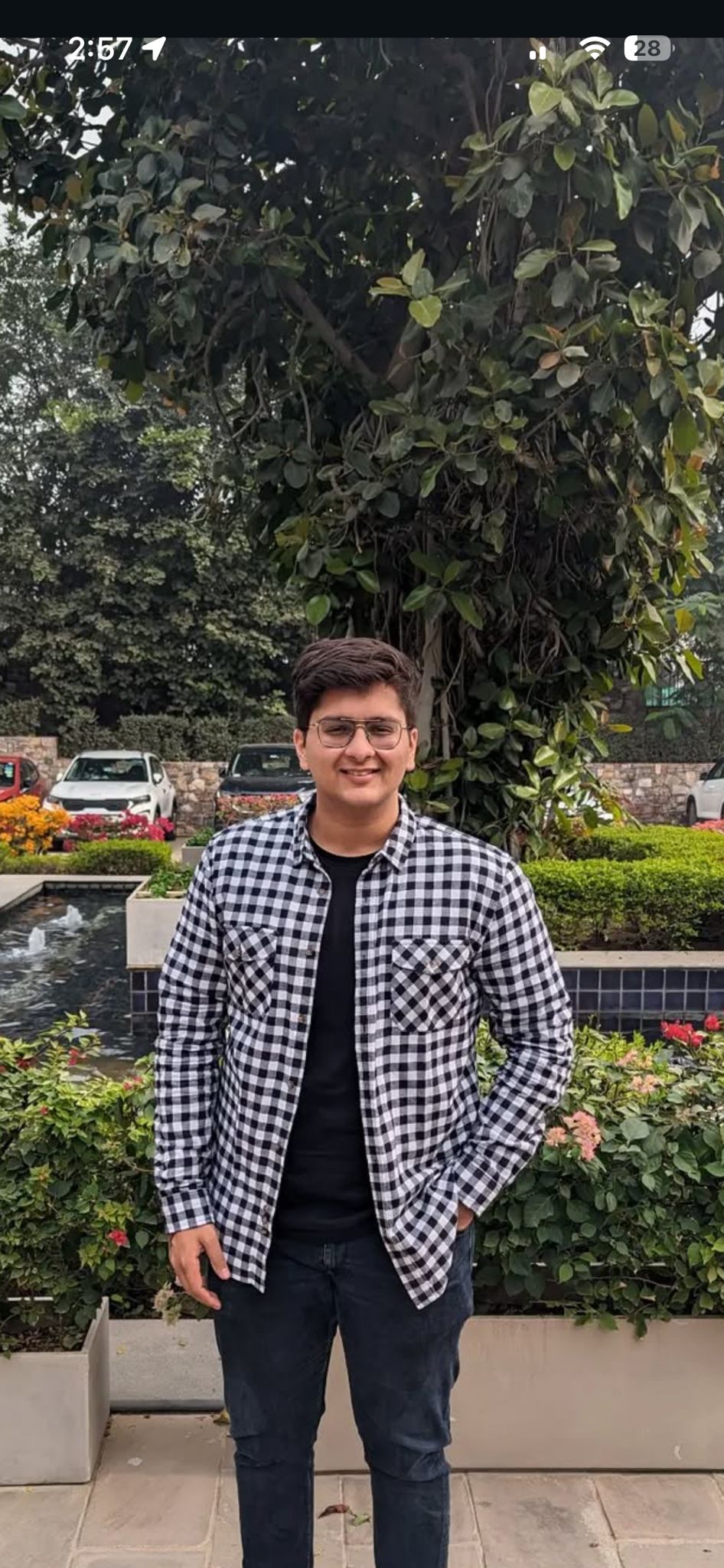
Panshul Jindal continues to live in Lucknow with Sthanmugam Jr. He is currently banned from Narita Airport. His GoFundMe for Irfan's therapy has raised ₹47 lakhs.