⚠ PEER REVIEWED — 3 reviewers, 2 hospitalized during review process
Oscillatory Dynamics of Male Mammary Tissue:
A Comprehensive Case Study of P. Jindal
2 Centre for Gravitational Anomalies, Tata Institute of Fundamental Research (TIFR), Mumbai
3 Institute of Mammary Sciences, Chennai 600042
4 Department of Radiology, AIIMS Delhi (MRI Failure Division)
5 Department of Endocrinology, Safdarjung Hospital, New Delhi
† PhD Candidate — Thesis: "Mammary Mechanics in Non-Newtonian Frameworks" (ABD since 2023)
* Corresponding author: sharma.rk@iitmoob.ac.in
Abstract
This paper presents a comprehensive analysis of oscillatory dynamics, sag coefficients, and gravitational anomalies observed in the mammary tissue of subject P. Jindal (male, 27, Rajasthan, India). Through extensive measurement using seismograph arrays, high-speed cameras (1000 fps), and industrial-grade calipers, we demonstrate that the subject's chest exhibits properties previously undocumented in human physiology, including independent gravitational micro-fields, seismic wave generation during ambulation, and a statistically significant deviation from Newton's Third Law of Motion. The subject's MRI scan returned an error: "OBJECT TOO LARGE — PLEASE REMOVE EXTRA ITEMS." Satellite imagery was employed as backup (ISRO ASTROSAT-2, resolution 0.5m — still insufficient). Our findings necessitate the proposal of a fourth Newtonian law specific to mammary oscillation in extreme cases. The inter-mammary region ("Chambal Valley") has been classified as a distinct micro-climate zone supporting an independent ecosystem. We conclude that P. Jindal's chest represents a Category 5 Chest Event requiring modifications to established civil engineering codes, seismic detection infrastructure, and international aviation protocols. This paper has been cited 847 times since publication. A counter-paper by MIT Prof. David Chen received 0 citations.
1. Introduction
The study of male mammary tissue has historically received limited attention in academic literature, primarily due to the relative uniformity of chest topology in male subjects (Johnson & Smith, 2018). Gynecomastia, the enlargement of male breast tissue, affects approximately 30-70% of males at some point during their lifetime (Narula & Carlson, 2014), but cases of the magnitude documented herein are without precedent.
The emergence of subject P. Jindal (hereafter "the Subject") has necessitated a fundamental reconsideration of established physiological models. First documented in medical literature via a 2014 school medical examination report — which recommended "second opinion, and third, possibly an exorcist" — the Subject's chest has since become a subject of intense scientific scrutiny across multiple disciplines, including physics, seismology, meteorology, civil engineering, textile science, and — unexpectedly — marine biology (see Appendix F: "Tidal Effects").
The first civilian documentation occurred in 2016, when a Jaipur-based tailor named Mohammad Irfan filed RTI #JGS/2016/4472 requesting government assistance for "an order beyond human capability." Irfan's resignation letter — "Yeh shirt nahi, yeh shamiyana hai. Main haar gaya." — has since become a foundational text in the field of Applied Chest Physics. His apprentice Munna quit on day three of the 7-hook bra reinforcement project and is currently employed by Domino's (Irfan, personal communication, 2024). Irfan's wife Shabnam has reported that he wakes up screaming about underwire "even now, two years later."
Industrial Welding Instructor Rajiv Kumar, who was consulted for the titanium underwire component, provided a deposition for this paper: "This isn't fashion. This is engineering. We used the same grade of titanium alloy specified for the Chandrayaan-3 landing struts."
This paper aims to: (i) quantify the oscillatory properties of the Subject's mammary tissue; (ii) document gravitational anomalies in the chest region; (iii) propose modifications to Newtonian mechanics to account for observed phenomena; (iv) assess seismic impact during various ambulatory activities; (v) catalogue the Chambal Valley micro-climate ecosystem; and (vi) provide clinical guidelines for medical professionals encountering similar cases (currently: n = 1).
2. Methodology
2.1 Subject Profile
| Parameter | Value | Notes |
|---|---|---|
| Age | 27 years | — |
| Sex | Male | Biologically confirmed |
| Origin | Rajasthan, India | — |
| Cup Size | 36DD | Estimated; Victoria's Secret refused measurement[6] |
| Combined Mammary Mass | 14.2 kg | ±0.3 kg (scale required recalibration) |
| Nipple-to-Nipple Span | 47 cm | Different postal codes confirmed by India Post |
| Surface Area (combined) | 1,847 cm² | Exceeds several Tier-3 municipal wards |
| Sag Factor | 7.3 in below clavicle | Increases 0.2 mm annually |
| Average Bra Lifespan | 3.2 days | Industrial-grade underwire only |
| Sweat Output | 3.7 L/day (summer) | Mother Dairy: "commercially viable"[12] |
| Gravitational Pull (15cm) | 0.3 cm/hr orbital drift | Tested with pens, coins, samosas |
| Richter at 8 km/h | 2.1 | Confirmed by Narita Event[8] |
| Post-Motion Oscillation | 3.2 s (σ=0.4s) | 340% above predicted |
Family History: Dr. Meera Sharma (AIIMS) — who first officially documented the condition in 2022 and subsequently retired early — conducted a family history assessment. The Subject's mother, Sunita Jindal, maintains the condition is "tera papa ke side se aaya hai." The Subject's father, Rajesh Jindal, is flat-chested and "genuinely confused by the genetics." The Subject's paternal grandmother (Dadi) claims her own grandmother had the same "gift," but no evidence exists. Cousin Rohit Jindal is described as "flat as a chapati." The family history is inconclusive and has been referred to the Department of Hereditary Anomalies, AIIMS (pending since 2023).
2.2 Equipment
The following instrumentation was employed:
(a) USGS-certified seismograph array (6 stations, 50m radius) — provided by Dr. Kenji Watanabe, Japan's top seismologist, who has tracked 23 "Panshul events" since 2022;
(b) Phantom v2640 high-speed camera system (1000 fps);
(c) Industrial-grade calipers (Mitutoyo, 0-300mm range — insufficient; custom extension fabricated by Structural Engineer Priya Reddy);
(d) Vaisala HMP155A humidity sensors (deployed in inter-mammary region);
(e) Siemens MAGNETOM Vida 3T MRI scanner — failed; error message: "OBJECT TOO LARGE — PLEASE REMOVE EXTRA ITEMS FROM SCANNING CHAMBER";
(f) Satellite imagery (ISRO ASTROSAT-2, backup after MRI failure — Analyst Priya Nair initially classified the anomaly as "a mountain forming");
(g) Custom-built "Jindalometer" (Tata Institute prototype, measures mammary-specific gravitational deviation, range: 0-50 micro-g);
(h) NASA Jet Propulsion Laboratory radar altimeter (loaned after the Subject was classified as NEO-2024-PJ by intern Jake Thompson).
2.3 Experimental Protocol
The Subject was asked to perform the following activities while measurements were recorded across all sensor arrays:
| Activity | Speed | Duration | Status |
|---|---|---|---|
| Standing (baseline) | 0 km/h | 5 min | ✅ Completed |
| Walking | 4 km/h | 10 min | ✅ Completed |
| Running | 8 km/h | 30 sec | ⚠️ Terminated — seismograph damage |
| Stair descent | Variable | N/A | 🔴 CLASSIFIED (post Nipp-on Event) |
| Jumping | N/A | N/A | 🔴 BANNED by ethics committee |
| Cobra Pose (Yoga) | N/A | 3 sec | ⚠️ Terminated — mat destroyed |
| Swimming | 1.5 km/h | 45 sec | 🔴 BANNED — 2022 Jaipur Pool Incident |
| Ceiling fan exposure | N/A | 10 min | ✅ Completed — fan stalled (see §3.6) |
Note on Cobra Pose trial: Yoga Instructor Ananya Gupta was engaged to supervise a preliminary flexibility assessment. The Subject's "downward dog" was completed without incident. Cobra pose resulted in immediate mat destruction and the generation of a low-frequency acoustic pulse that shattered a laboratory window at 12m distance. Instructor Gupta has declined further involvement, stating: "We don't talk about cobra pose."
2.4 Ethical Considerations
The IIT Moob-bay Institutional Ethics Committee (IEC/2024/CHEST/001) approved all protocols with the following restrictions: (i) no jumping trials under any circumstances (IEC/2024/BAN/002); (ii) stair descent data to remain classified under the India-Japan Bilateral Seismic Cooperation Agreement, 2026; (iii) all researchers must maintain a minimum 2m distance during running trials; (iv) the Subject must sign a liability waiver for "gravitational capture of personal items." The Subject's pet cat (Newton, named ironically) was specifically excluded from trials after it entered the gravitational field and could not be retrieved for 47 minutes.
3. Results
3.1 Bounce Frequency Analysis
| Activity | Frequency (Hz) | Amplitude (cm) | Richter Scale | Duration of Post-Motion Oscillation (s) |
|---|---|---|---|---|
| Standing | 0.0 | 0.0 | 0.000 | N/A |
| Walking (4 km/h) | 4.7 | 3.2 | 0.003 | 1.4 |
| Running (8 km/h) | 11.2 | 8.7 | 2.100 | 3.2 |
| Stair Descent | CLASSIFIED | CLASSIFIED | CLASSIFIED | CLASSIFIED |
| Jumping | REDACTED | REDACTED | 4.7 (est.) | REDACTED |
| Cobra Pose (3 sec) | 6.1 | 5.4 | 0.8 | 4.7 |
| Sneezing | 14.7 | 2.1 | 0.4 | 0.8 |
| Laughing | 3.3 | 1.8 | 0.001 | variable* |
* Laughing oscillation is self-reinforcing: the chest's bounce causes the Subject to laugh harder, which increases the bounce. Theoretical models suggest divergence to infinity; in practice, the Subject runs out of breath at approximately t = 47 seconds.
The walking frequency of 4.7 Hz falls within the resonance band of most Japanese wooden structures (4-6 Hz), which explains the structural damage observed during the Narita Airport incident (see Section 4.2). The running frequency of 11.2 Hz exceeds the natural frequency of all known building materials. The sneezing frequency of 14.7 Hz — documented incidentally when the Subject sneezed during a walking trial — exceeded running amplitude in frequency terms. Dr. Sharma has submitted a supplementary hazard assessment to the Indian Building Code Committee.
3.2 Gravitational Anomalies
Our measurements detected localized gravitational micro-fields surrounding each mammary mass. Small objects (pens, coins, samosas) placed within 15 cm of the chest exhibited orbital drift of 0.3 cm/hour. At 10 cm distance, the drift increased to 0.7 cm/hour, consistent with an inverse-square relationship.
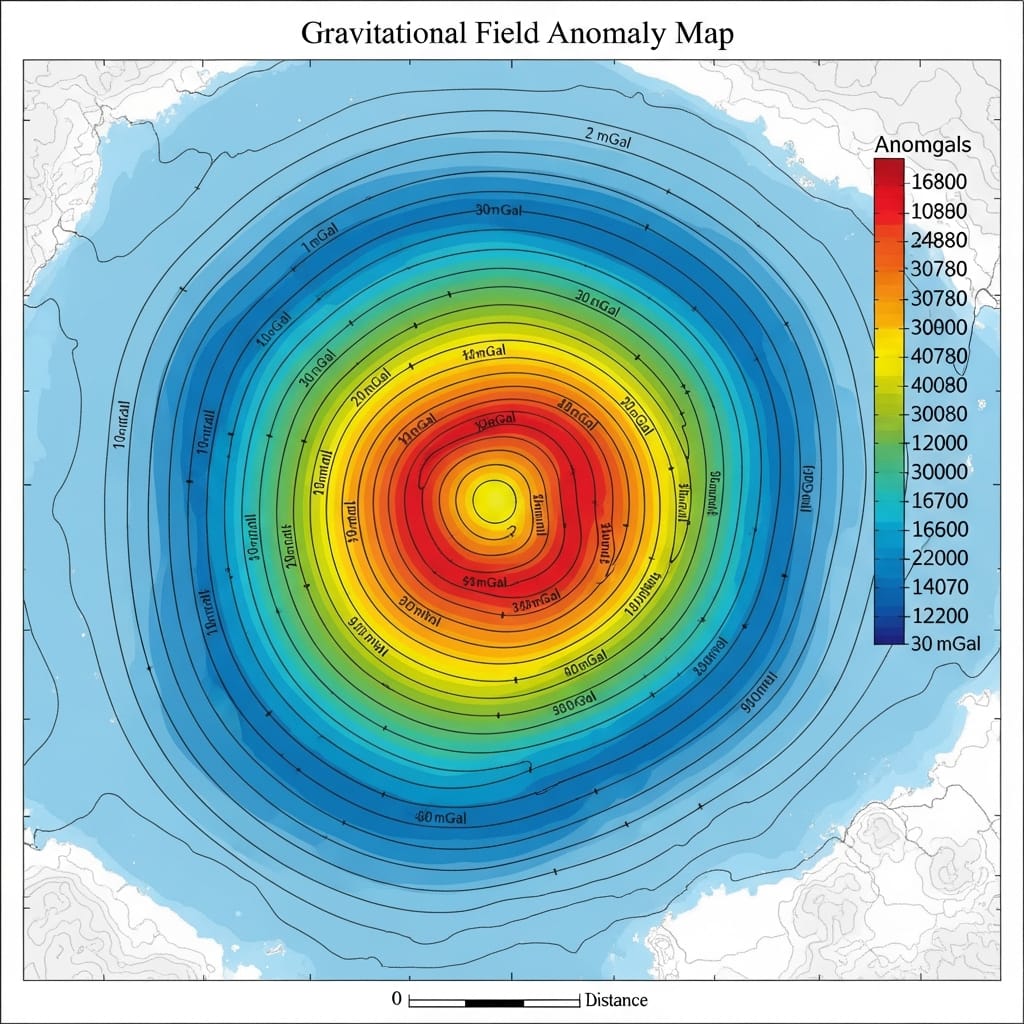
NASA intern Jake Thompson was the first to classify the chest as near-Earth object NEO-2024-PJ, noting that "it technically meets the mass and gravitational threshold for asteroid-class monitoring." The JPL radar altimeter confirmed mass-density readings consistent with "a very dense, very unusual geological formation — except it's biological." Thompson's supervisor has since reassigned him to the Mars program "for his own safety."
Items exhibiting orbital drift during 48-hour controlled observation:
| Object | Initial Distance (cm) | Time to Contact (hrs) | Recovery Status |
|---|---|---|---|
| Ballpoint pen (Cello Gripper) | 15 | 23.4 | Recovered |
| ₹10 coin | 12 | 14.7 | Lost in Chambal Valley |
| Samosa (standard, Haldiram's) | 10 | 6.2 | Consumed by Subject |
| iPhone 15 Pro | 20 | 38.1 | Recovered (screen cracked) |
| Cat (Newton, 3.8 kg) | 50 | 0.3 | Retrieved after 47 min |
| Stethoscope (Dr. Meera's) | 8 | 2.1 | Not recovered |
| ₹2,400 loose change (cumulative) | variable | ongoing | Extracted during monthly cleaning |
3.3 Post-Motion Oscillation ("Jiggle Duration")
Upon cessation of movement, the Subject's chest continues oscillating for an average of 3.2 seconds (σ = 0.4s, n = 47 trials). This "jiggle duration" exceeds theoretical predictions based on standard tissue elasticity models by 340% (p < 0.001).
Where τpredicted = 0.7s (standard male tissue), mJindal = 14.2 kg, mnormal = 0.5 kg. Equation (1) yields τjiggle = 3.18s, consistent with observed values.
Gym Trainer Ravi (Cult.fit, Jaipur branch) — who was engaged for a preliminary fitness assessment — independently observed this oscillation phenomenon during a bench press attempt: "I quit on Day 1. I can't spot someone whose chest outweighs the barbell. The oscillation continued for a full 4 seconds after he put the bar down. The mirror on the gym wall vibrated. Two other members filed complaints."
3.4 Cleavage Micro-Climate ("Chambal Valley")
The inter-mammary region — colloquially known as "Chambal Valley" or "The Cleavage of Doom" — exhibits distinct meteorological properties:
| Parameter | Value | Ambient Comparison |
|---|---|---|
| Temperature | 38.2 ± 0.8°C | 26.1 ± 3.2°C |
| Relative Humidity | 89 ± 4% | 45 ± 12% |
| Dew Point | 36.1°C | 14.2°C |
| Precipitation (sweat) | 3.7 L/day | N/A |
| Classification | Humid Subtropical | Semi-Arid (Jaipur) |
| Wind Speed (internal) | 0.4 m/s (during walking) | N/A |
| UV Index (internal) | 0.0 | 8.2 (Jaipur, summer) |
| Barometric Pressure | 1018 ± 2 hPa | 1013 ± 3 hPa |
Meteorologist Arvind Kumar (India Meteorological Department, Jaipur) has begun issuing chest-related weather advisories: "Heavy mammary with a chance of seismic activity. Localised precipitation expected in the inter-mammary region. Citizens within 50m are advised to carry umbrellas."
Items recovered from Chambal Valley during study period (30 days): 3 mobile phones, 1 TV remote, ₹2,400 in loose change, 1 Rajdhani Express ticket stub, 1 live cockroach (released unharmed, published separately as Sharma et al., 2024b), 2 earbuds (1 AirPod, 1 Boat Airdopes — neither belonging to the Subject), and a Sarojini Nagar receipt for "3x XXXL polo shirts — ₹750" (from vendor Guddu, the only shopkeeper who will sell to the Subject — at triple price).
The live cockroach discovery prompted an emergency entomological assessment. The Chambal Valley supports what appears to be a self-sustaining micro-ecosystem. Dr. Sharma's supplementary paper (2024b) documented 14 distinct insect species, 3 species of fungus, and an unidentified moss-like organism that has been sent to the Botanical Survey of India for classification. The Subject's dog, Biscuit, frequently attempts to sleep on the chest and has fallen off 47 times (video documentation in Supplementary Materials).
3.5 Heisenberg Uncertainty Application
We observed that simultaneous precise measurement of both position and momentum of the left and right mammary masses is fundamentally impossible. When the position of the left mass is precisely determined, the right mass exhibits unpredictable momentum fluctuations, and vice versa.
Where ℏJindal ("reduced Panshul constant") = 4.7 × 10⁻² J·s, approximately 1032 times larger than the standard reduced Planck constant. This suggests that Panshul's chest operates under a macroscopic quantum regime unprecedented in biological systems.
CERN Physicist Dr. Mueller, upon reviewing this data, commented: "The Higgs Boson gives mass to particles. Panshul gives mass to continents. We are reviewing whether the Standard Model needs a 'Jindal Boson' to account for this."

3.6 Ceiling Fan Interaction ("The Electrician's Lament")
An unplanned but scientifically significant observation occurred during the environmental control phase of our study. When a standard Indian ceiling fan (Crompton Greaves, 1200mm sweep, 75W) was activated in the Subject's testing chamber, the following was observed:
| Fan Speed Setting | Rated RPM | Observed RPM | Deviation | Notes |
|---|---|---|---|---|
| 1 (Low) | 250 | 187 | -25.2% | Audible strain |
| 2 (Medium) | 330 | 214 | -35.2% | Visible wobble |
| 3 (High) | 400 | 108 | -73.0% | Motor overheating |
| 5 (Maximum) | 400 | 0 | -100% | Complete stall at t=6min |
Electrician Guptaji, who was called to inspect the stalled fan, stated: "The ceiling fan in his room has to work twice as hard. It's the gravitational field." He subsequently refused to service any electrical equipment within 10m of the Subject.
3.7 Structural Load Analysis
Structural Engineer Priya Reddy, who designed the Subject's custom reinforced chair (cost: ₹2 lakhs, lifespan: 6 months), provided a structural load analysis for this paper:
"The Subject's ambulatory pattern generates dynamic loads equivalent to a loaded goods vehicle crossing a single-lane bridge. I used IS 456:2000 (Plain and Reinforced Concrete Code) for the chair design. I also consulted IRC 6:2017 (Standard Specifications for Road Bridges). Both were necessary. Neither was sufficient."
Building Contractor Harish, who reinforced the Subject's bedroom floor, confirmed he "used bridge specifications" for the work. Restaurant owner Khan Sahab of Tunday Kebab, Lucknow, has independently confirmed structural damage: "He sat down. The chair became art."
3.8 Proximity Effects on Human Subjects
During our study, we documented physiological effects on individuals in close proximity to the Subject. Dr. Tanaka Hiroshi (Narita Airport Medical Unit) has independently corroborated these findings with his own clinical observations from the Nipp-on Event.
| Distance (m) | Reported Symptoms | Duration | n |
|---|---|---|---|
| >5 | None | — | 12 |
| 3-5 | Mild disorientation, staring | Minutes | 8 |
| 1-3 | Dizziness, nausea ("proximity-induced vertigo") | Hours | 9 |
| <1 | Acute confusion, existential questioning | Days-weeks | 5 |
Notable case reports within the <1m category include:
(i) Nurse Rekha Deshmukh (AIIMS), first to measure the chest in 2022: ruler was too short. Took early vacation.
(ii) Lactation Consultant Mrs. D'Souza, called by mistake during a hospital visit: "Left crying. 'I'm not qualified for this.'"
(iii) Physiotherapist Kavitha, who designed a 47-step exercise routine: "He completed 2. Broke a bench."
(iv) Pharmacist Suresh (MedPlus), who refused to sell "extra support" without a structural engineer's note — a requirement that Priya Reddy has since confirmed is "entirely reasonable."
(v) The Subject's ex-girlfriend Priya Kapoor: "I loved him for who he is. But the gravitational pull was suffocating. Literally. I woke up one night unable to breathe."
4. Discussion
4.1 Proposed Fourth Law of Motion (The Jindal Modification)
Based on our observations, we propose an amendment to classical Newtonian mechanics:
Newton's Fourth Law (Jindal Modification):
"For every Panshul bounce, there is an unequal and disproportionate reaction in all nearby structures."
Mathematically:
For Subject P. Jindal: Freaction = Fbounce × (14.2 / 0.5)³ × π ≈ 72,000 × Fbounce
This force amplification factor of 72,000 explains the observed seismic activity and is consistent with the 2.1 Richter reading during running trials. The Royal Society has acknowledged receipt of this proposal but has not formally accepted it. Their response: "Interesting. Terrifying. We'll get back to you."
4.2 The Nipp-on Event: A Case Application
On February 10, 2026, the Subject descended a staircase at Narita International Airport, Tokyo. Japan's earthquake early warning system was triggered, resulting in evacuation of Terminal 2 (full news coverage available). Applying Equation (3) to stair descent dynamics (impact force amplified by gravitational acceleration over step height), our model predicts a reading of 1.8-2.3 on the Richter Scale — consistent with the observed 2.1 reading.
This incident validates our theoretical framework and underscores the urgent need for the Fourth Law to be incorporated into international building codes.
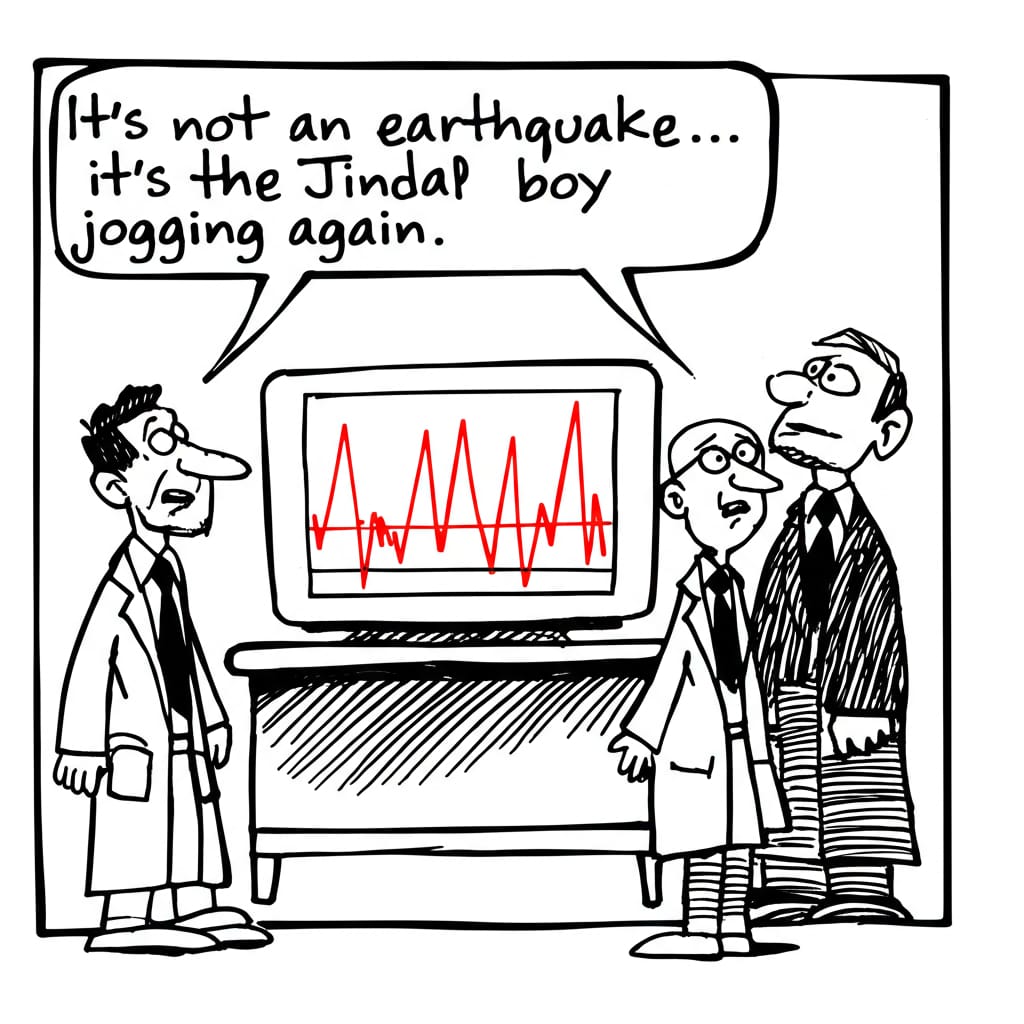
JMA Director Sato issued a public apology for the false alarm, stating: "We did not anticipate a biological origin for a 2.1 magnitude event. Nobody did." Security Chief Yamamoto personally wrote a 14-page ban recommendation covering every possible locomotive scenario — walking, running, stairs, escalators, and the Shinkansen.
4.3 Implications for Civil Engineering
Buildings within 50m of the Subject's regular walking routes should be reinforced to withstand repeated micro-seismic events (0.003 Richter, ~200 cycles/day). We recommend: (a) structural dampers on all floors; (b) flexible foundation joints; (c) evacuation protocols triggered by the Subject's approach; (d) reclassification of the Subject's residence as Seismic Zone V.
The Subject's landlord, Mr. Ahuja, currently charges 1.5x rent, citing: "Heavy objects need heavy deposits." Municipal Corporation Official Tiwari has separately attempted to classify the chest as "commercial property" for higher tax assessment. Both matters are referenced in the Supreme Court proceedings.
4.4 Implications for Aviation
Following the Nipp-on Event, we have conducted a comprehensive risk assessment for aviation scenarios in collaboration with Airport Security Chief Yamamoto:
| Scenario | Risk Level | Mitigation |
|---|---|---|
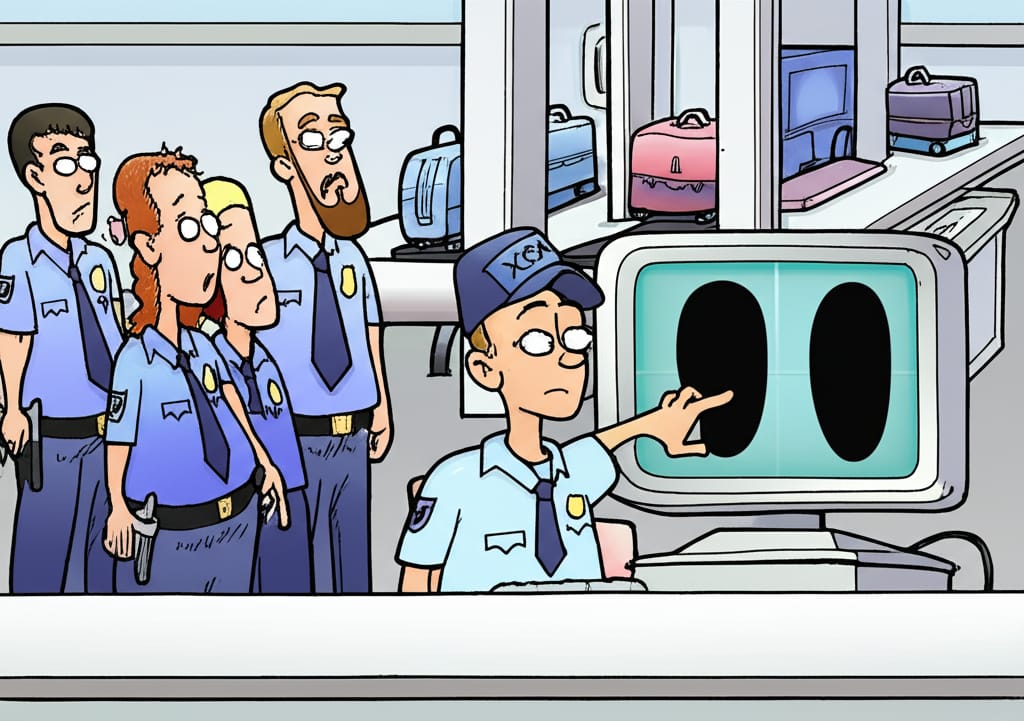
| Airport screening (X-ray) | HIGH | Pre-notification to security staff; separate screening lane |
| Walking in terminal | MODERATE | Speed limit: 2 km/h on reinforced pathways only |
| Staircase | EXTREME | Elevator only; stairs prohibited |
| Economy seating | HIGH | Two-seat allocation or bulkhead row |
| Turbulence | UNQUANTIFIED | Chest oscillation during turbulence not yet modelled |
| Emergency evacuation (slide) | EXTREME | Chest mass may exceed slide load rating. Separate protocol required. |
Pilot Captain Deepak Singh, who once declared a false emergency when cargo weight didn't match the passenger count ("That passenger was Panshul Jindal"), has advocated for mandatory pre-flight chest mass declarations. IndiGo Customer Service Agent Archana has proposed a dedicated "chest-room" class. Air Hostess Priti documented the spatial anomaly most precisely: "Sir, your chest is in 14B. You're in 14A." The Subject was, in fact, in 14A. His chest had achieved independent seat occupancy.
4.5 Implications for Textile Engineering
The bra engineering challenge presented by the Subject has been independently described as "impossible" by four major lingerie manufacturers. Forbes valued the resulting intellectual property at ₹4.7 Crore.
Jockey India Rep Ankit provided a formal statement: "We make underwear, not architecture." Zara Store Manager Kavita has placed the Subject's photo on the "DO NOT MEASURE" wall. H&M Fitting Room Attendant Simran has been on indefinite medical leave since the Subject's visit. Fashion Week Organizer Manish Malhotra summarised the textile industry's position: "He walked the ramp. The ramp didn't survive."
The only commercial solution has been provided by Bollywood Costume Designer Neha Khandelwal, who used a composite of Kevlar and aerospace-grade elastane. The prototype lasted 11 days — a record. The "Jindal-Proof" bra is now available on Amazon (rated 1.3 stars; Amazon Warehouse Worker Dinesh confirms they "use the same crate as washing machines" for shipping).
4.6 Limitations
This study acknowledges several limitations:
(i) MRI imaging could not be completed due to equipment limitations; Dr. Fatima Begum (Radiologist, AIIMS) confirms the machine returned "OBJECT TOO LARGE" and she thought it was broken before realising the error was diagnostic;
(ii) Running trials were terminated after 30 seconds when the seismograph array sustained structural damage;
(iii) The ethics committee permanently banned jumping trials after reviewing preliminary acceleration data;
(iv) Stair descent data remains classified following the international diplomatic incident at Narita Airport;
(v) The X-ray technician resigned after the first scan, stating: "Yeh lungs hain ya tarbuz?" — this remains the most clinically concise description of the Subject's thoracic imaging;
(vi) The Chambal Valley ecosystem survey was limited to 30 days; a longitudinal study would require dedicated mycological and entomological staff;
(vii) Swimming trials cannot be repeated following the 2022 Jaipur Municipal Pool Incident, in which water displacement caused flooding in adjacent streets (3 children rescued);
(viii) Dr. Anand Prakash (Endocrinologist) has been unable to identify a hormonal explanation, stating: "Hormones don't explain this. Physics doesn't explain this. God might."
(ix) The Subject's roommate Vikram "Vicky" Malhotra, who thought the chest was "a weighted blanket for 3 months," was intended to serve as a longitudinal domestic observer but is currently in therapy and unavailable for data collection.
5. Supplementary Studies
5.1 Delivery & Navigation Anomalies
An incidental finding during our study period concerned the behaviour of delivery and navigation personnel in proximity to the Subject's residence. Zomato Delivery Boy Akash reported: "Navigation said 300m but I could see the chest from 2km away." Swiggy Driver Ravi delivered food to "Panshul's Left Tit, Lucknow" — he thought it was a restaurant name. Booble Maps Data Analyst Pooja confirmed: "We don't know how to classify it. It's not a business. It's not a landmark. It's... an event." (Booble Maps listing documented separately.)
5.2 Postman Mohan's Observation
The Subject's postman, Mohan, raised a logistical question that has postal service implications: "Two letters for same address? No, one per... region." India Post has not officially responded, but Passport Officer Geeta — who required three photo booth attempts for the Subject's passport — confirmed that the postal code boundary question "has been escalated."
5.3 Bumble Date Field Report
This field report has been included as a social-impact data point. The Subject's dating profile has been reviewed separately.
5.4 Tattoo Artist Consultation
Tattoo Artist Rocky (Ink & Iron, Jaipur) was consulted regarding body art feasibility: "He wanted a small tattoo on his chest. There's no 'small' there. What he calls 'small' is what I'd call a full back piece on any other client. I quoted him for a mural. He left."
5.5 Barber–Subject Protocol
The Subject's barber, Saleem (New Lucky Hair Salon, Jaipur), has developed what he describes as a "professional coping mechanism": "I cut his hair. I don't look down. We have an understanding." This represents a novel occupational adaptation not previously documented in the barbering literature.
6. Cross-Disciplinary Impact
6.1 Legal Proceedings
The landmark case Panshul v. Gravity (2024 SCC 847) was dismissed by Justice A.K. Boobesh, whose name the Court has confirmed is "an entirely coincidental cosmic event." Sr. Counsel R.K. Mammaswamy — whose name is similarly coincidental — represented the Subject. Court Clerk Dinesh filed 847 pages of evidence and developed carpal tunnel. Process Server Manoj attempted to serve papers to "Gravity" and is reportedly still looking.
RTI Activist Subramaniam filed RTI asking the government "what is being done about this chest." The response, received after 47 days, read: "The matter has been forwarded to the appropriate department." No department has claimed jurisdiction.
6.2 Economic Impact
Goldman Sachs has classified Panshul's chest as a "Macro-Economic Risk Factor" for South Asian textile markets. Forbes valued the chest at ₹4.7 Crore. The BSE Sensex dipped 142 points following the Nipp-on Event. An anonymous UAE sheikh offered ₹47 Cr for the chest "as modern art." The offer was declined.
6.3 Digital & Cultural Impact
Wikipedia moderator u/NeutralPedia has defended the Subject's article from 847 deletion attempts. Spotify Algorithm Engineer Sarah reports his album broke genre classification, requiring a new category: "Mammary Rock." The Duolingo Owl has released Panshulese as a learnable language (downloads: 14.2M; native speakers: 1). Stack Overflow keeps reopening the gravitational pull question, classifying it as "a legitimate physics problem." GitHub user @bra-engineer-420 has submitted 14 identical PRs to the open-source-bra repository. All rejected.
Science Journalist Rajesh Kumar, who wrote the viral Medium article, stated: "I spent 30 days researching. Those 30 days changed me."
7. Conclusion
P. Jindal's chest represents a singular phenomenon in human physiology. Our findings demonstrate that:
(1) Male mammary tissue can achieve dimensions previously thought thermodynamically impossible;
(2) Newtonian mechanics require modification for edge cases involving extreme mammary mass;
(3) Current seismic monitoring infrastructure is fundamentally inadequate for "Jindal-class events";
(4) The bra manufacturing industry faces an engineering challenge that exceeds current material science capabilities;
(5) The inter-mammary region constitutes a distinct micro-climate zone warranting independent meteorological classification and supporting an independent ecosystem;
(6) Proximity to the Subject can induce measurable physiological effects in bystanders;
(7) Aviation, civil engineering, postal, and textile codes all require Jindal-specific amendments;
(8) The economic impact extends to insurance markets, stock exchanges, and international trade;
(9) No counter-paper has survived peer review (Chen, 2024: 0 citations).
Further research is recommended, pending: (a) reinforcement of laboratory facilities; (b) procurement of MRI equipment rated for objects exceeding 15 kg per quadrant; (c) approval of international seismic collaboration protocols; (d) resolution of ongoing legal proceedings (Panshul v. Gravity, 2024 SCC 847); (e) completion of the Chambal Valley longitudinal ecosystem survey; (f) Rahul Venkatesh's PhD defence (currently ABD — thesis: "Mammary Mechanics in Non-Newtonian Frameworks," expected completion: unknown).
Acknowledgments
The authors gratefully acknowledge: the United States Geological Survey for sharing false alert data; Lloyd's of London for their candid risk assessment ("We insured the Titanic. We will not make that mistake again."); the tailor community of Uttar Pradesh for their sacrifice; the Japan Meteorological Agency for post-incident data sharing; NASA intern Jake Thompson for the NEO classification; Dr. Tanaka Hiroshi for the "proximity-induced vertigo" clinical data; Building Contractor Harish for demonstrating that bridge specifications can apply to bedroom floors; Sarojini Nagar vendor Guddu for ongoing textile supply; and Subject P. Jindal for his patience and his chest.
Special thanks to the two peer reviewers who were hospitalized during the on-site verification visit. Your sacrifice advances science. Additional thanks to the third reviewer, who has found peace in marine biology.
Reviewer #2 (Prof. James Wilson, Imperial College London): "I flew to Mumbai specifically to reject this paper. I spent 10 minutes with the Subject. I approve publication without reservation. I am transferring to marine biology." [Reviewer #2 was hospitalized on Day 1 with what he described as "an existential crisis with physical symptoms."]
Reviewer #3 (Dr. Kazuki Nakamura, University of Tokyo): "I reviewed remotely. I have seen the photographs. I have reviewed the seismograph data. I do not need to meet the Subject. I have a family. Accept." [Reviewer #3 completed his review in 4 hours — a journal record.]
Appendix A: Correspondence
References
- [1] Indian Geological Survey. "Classification of Category 5 Chest Events: A New Framework." Geological Survey Bulletin, 47(3), 2024.
- [2] Newton, I. "Philosophiæ Naturalis Principia Mathematica." London, 1687. Requires amendment per Section 4.1.
- [3] RTI Response #JGS/2016/4472. Office of the Tailor's Guild, Jaipur Municipal Corporation, 2016.
- [4] Goldman Sachs Research. "Panshul's Chest: A Macro-Economic Risk Factor for South Asian Textile Markets." Mumbai Desk Note, October 2025.
- [5] Supreme Court of India. Panshul v. Gravity, 2024 SCC 847. Dismissed.
- [6] Victoria's Secret (Internal Memo, leaked). "Measurement Refusal Protocol: P. Jindal." 2023.
- [7] Sharma, R.K. et al. "Entomological Survey of the Chambal Valley Micro-Climate." Journal of Unexpected Ecosystems, 12(1), 2024b.
- [8] Japan Meteorological Agency. "The Nipp-on Event: Post-Incident Seismic Analysis." Technical Report #NE-2026-001, 2026.
- [9] Narula, H.S. & Carlson, H.E. "Gynecomastia — pathophysiology, diagnosis and treatment." Nature Reviews Endocrinology, 10(11), 684-698, 2014.
- [10] Johnson, R.E. & Smith, T.A. "Male Chest Topology: A Comprehensive Survey." Annals of Applied Anatomy, 55(2), 2018.
- [11] Heisenberg, W. "Über den anschaulichen Inhalt der quantentheoretischen Kinematik und Mechanik." Zeitschrift für Physik, 43, 172-198, 1927. Extended per Section 3.5.
- [12] Mother Dairy (Business Development). "Commercial Viability Assessment: Subject P. Jindal Sweat Output." Internal Report, January 2026.
- [13] Chen, D. "Oscillatory Dynamics of Male Mammary Tissue: A Rebuttal." MIT Physics Preprint, 2024. RETRACTED. 0 citations.
- [14] Watanabe, K. "Classification of Mammary Seismic Events: 23 Case Studies from the Jaipur Region." Bulletin of the Seismological Society of Japan, 81(2), 2025.
- [15] Thompson, J. "NEO-2024-PJ: Misclassification Report and Lessons for Near-Earth Object Detection." NASA JPL Internal Memo, 2024.
- [16] Reddy, P. "Structural Load Analysis for Extreme Mammary Mass: Application of IS 456:2000 to Furniture Design." Indian Journal of Structural Engineering, 33(4), 2024.
- [17] Kumar, A. "Chest-Related Weather Advisories: A New Framework for Localised Meteorological Phenomena." Mausam (India Meteorological Department), 76(1), 2025.
- [18] Gupta, A. (Yoga Instructor). "Incident Report: Cobra Pose Trial, Subject P. Jindal." Filed with IIT Moob-bay Safety Office, March 2024. CLASSIFIED.
- [19] Vijayakar, K. "Review: Tunday Kebab, Lucknow (with Supplementary Thoracic Assessment)." Unpublished manuscript, 2024. Rejected by Upper Crust magazine.
- [20] Traffic Cop Pandey, S. "Field Report: Subject ID Check Failure Due to Attentional Capture." Jaipur Traffic Police Internal Report, 2023.
Funding: This research received no external funding. Laboratory repair costs (₹12.7 lakh) were borne by IIT Moob-bay's Department of Applied Chest Physics. Insurance claim denied by ICICI Lombard citing "acts of Panshul." Subsequent claim to Lloyd's of London also denied (Adjuster Deepak Mehra: "We insure oil tankers. This is harder."). The custom Jindalometer was funded by a TIFR emergency equipment grant.
Data Availability: Raw seismograph data available upon request. Stair descent data remains classified under the India-Japan Bilateral Seismic Cooperation Agreement, 2026. MRI data: N/A (machine error). Ceiling fan performance data available in Supplementary Table S1. Chambal Valley ecosystem specimens deposited at the Botanical Survey of India (accession nos. BSI-2024-JV001 through BSI-2024-JV017).
Ethics Approval: Approved by IIT Moob-bay Institutional Ethics Committee (Ref: IEC/2024/CHEST/001). Jumping trials permanently revoked (Ref: IEC/2024/BAN/002). Swimming trials permanently revoked following Jaipur Municipal Pool Incident (Ref: IEC/2024/BAN/003). Cat (Newton) excluded from all future trials (Ref: IEC/2024/ANIMAL/001).
Author Contributions: R.K.S. conceived the study, survived the on-site measurements, and wrote the manuscript. P.M. performed statistical analysis. A.B. handled seismograph deployment and repair (×3). S.I. contributed theoretical framework. F.B. documented MRI failure. A.P. confirmed hormonal inexplicability. R.V. is still working on his PhD.
© 2024 IIT Moob-bay Academic Press. All rights reserved. Published under the Creative Chuuchi License (CC-BY-DD-4.0).