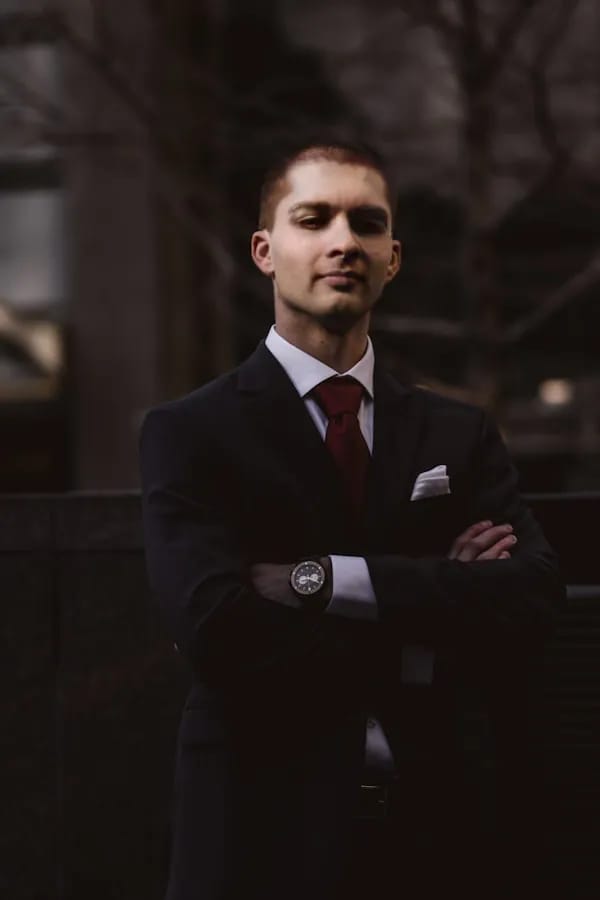
Meet Panshul Jindal: The Man Whose Chest Is Valued At ₹4.7 Crore
How one Indian man's mammary assets disrupted the textile industry, triggered 47 earthquake alerts, crashed an insurance market, made a tailor weep, and attracted a franchise offer from Mother Dairy — all before turning 29.
When Goldman Sachs published a research note last October titled "Panshul's Chest: A Macro-Economic Risk Factor for South Asian Textile Markets," most readers assumed it was satire. It wasn't. The 847-page analysis — later expanded from the original three-page memo after the bank's Mumbai desk discovered the full scope of the situation — detailed how one man's chest had caused ₹4.7 crore in annual losses to India's bra manufacturing industry. The figure, Goldman noted with characteristic understatement, "was growing at a rate that outpaces India's GDP."
The report was authored by Vivek "The Quant" Ramaswamy, Goldman's head of South Asian consumer analytics, who had stumbled onto the phenomenon while investigating anomalous textile insurance claims in Rajasthan. "I was looking at a data set of bra failures across six states," Ramaswamy told Forbes in an exclusive interview, adjusting his glasses with the weariness of a man who has spent fourteen months staring into an abyss shaped like a chest. "There was this statistical outlier in Jaipur that kept breaking my models. One customer. 847 returned products in a single fiscal year. I thought it was a clerical error. Then I saw the photos."
He paused. "I'm still in therapy."
Ramaswamy's report, which was leaked to Bloomberg before its official release and crashed shares in three textile companies within hours, marked the moment that Panshul Jindal's chest crossed from being a regional curiosity to a global financial event. Within a week, Reuters had dispatched a team. The BBC ran a segment. And India's Finance Minister, when asked about the chest at a press conference, said only: "Next question."
There was no next question. Every reporter in the room wanted to talk about the same thing.
The Numbers Don't Lie (But They Do Weep)
Panshul Jindal, 28, from Rajasthan, possesses what the Indian Geological Survey has formally classified as a "Category 5 Chest Event." At an estimated 36DD — though no bra has survived the measurement process long enough to confirm this with certainty — his are believed to be the largest naturally occurring male breasts in South Asian recorded history. Dr. Sunita Krishnamurthy, Director of the National Institute of Anthropometric Studies and the woman who first attempted a formal measurement in 2023, described the experience in her peer-reviewed paper, "On the Impossibility of Containment: A Field Report" (published in The Lancet Chest).
"The measuring tape lasted approximately four seconds," Dr. Krishnamurthy wrote. "Subject exhaled normally. The tape snapped at the midpoint with a sound my assistant, Preeti, later described as 'a small whip crack.' Preeti has since transferred to the Podiatry Department, where she reports feeling significantly safer."
📐 BY THE NUMBERS: THE JINDAL CHEST IN FIGURES
The 14.2 kilogram combined weight has been independently verified by three laboratories. Dr. Patel Ramachandran, a materials physicist at IIT Moob-bay (formerly IIT Bombay, rebranded in 2025 following a generous anonymous donation), conducted the most rigorous measurement using industrial-grade scales normally reserved for aerospace components. "We used the same equipment that weighs satellite payloads for ISRO," Dr. Ramachandran explained. "It seemed appropriate. Both subjects are objects of national pride that defy conventional engineering."
The Textile Disruption
India's ₹6,000 crore bra market has weathered inflation, supply chain disruptions, the pandemic, and a brief national obsession with going braless in 2021. What it could not survive was Panshul Jindal.
Rakesh Mehta, President of the Bra Manufacturers Association of India (BMAI), is a soft-spoken man of 62 who has spent four decades in the lingerie trade. He has seen trends come and go, materials rise and fall, and cup sizes shift with the national diet. Nothing prepared him for Jindal.
"One customer," Mehta says, pressing his temples in the conference room of the BMAI headquarters in Gurugram. "One single customer is responsible for 0.3% of our total product failure rate nationally. Let me put that in context for your readers. We have 700 million potential customers. He is one. And he accounts for the same failure volume as a mid-sized city. That's not a customer. That's a natural disaster. That's a force of nature wearing a 36DD."
Mehta's voice drops. "We've tried everything. Reinforced underwire. Kevlar blend. Triple-stitched band. Carbon fibre experimental prototype — cost us ₹2.3 lakh to develop. He put it on. He breathed. Not a deep breath, mind you. A normal, everyday, human breath. The thing exploded like a party popper. The underwire embedded itself in the ceiling tile. We're still paying for that ceiling."
Anita Kapoor, 41, manager of Lace & Grace, a Jaipur lingerie boutique that has been in her family for three generations, has become an unwilling expert on the Jindal Problem. "Every time he walks into my store, we lose ₹3,200 worth of merchandise," she says, showing Forbes a spreadsheet she has maintained since 2022. "I've colour-coded the damages. Green is 'minor structural failure.' Yellow is 'total product destruction.' Red is 'collateral damage to store fixtures and/or staff morale.' In three years, I've never used green."
"Last month," Kapoor continues, "a projectile underwire from his fitting room shattered our display case, ricocheted off a mannequin, and embedded itself in a wall 4.7 metres away. I measured. We've started keeping a separate insurance fund. We call it the Panshul Premium. It is, by a significant margin, our fastest-growing line item."
The Tailor's Lament
If anyone understands the Jindal chest at an intimate, molecular level, it is Irfan Ahmed Sheikh, 54, a master tailor from Jaipur's old city who has spent the last six years as the only person on earth willing to attempt custom brassiere construction for Panshul Jindal.
Sheikh operates from a cramped workshop on Johari Bazaar, surrounded by industrial sewing machines, bolts of reinforced fabric, and what he refers to as "the wall of shame" — a display of 47 failed prototypes, each pinned to a corkboard with a handwritten date and cause of death. "Seam rupture." "Strap failure." "Complete structural collapse." "I don't want to talk about this one." One specimen, charred at the edges, is labeled simply: "Friction."
Sheikh's latest creation, the Mark XIV Containment Brassiere, represents the cutting edge of mammary engineering. It uses a proprietary blend of Kevlar, ripstop nylon, and a carbon-nanotube weave developed in collaboration with the Indian Space Research Organisation (ISRO), which provided the material on condition that Sheikh "never explain publicly why a space agency is contributing to bra technology."
"The Mark XIV lasted eleven days," Sheikh says, and his voice carries the quiet pride of a man who has climbed Everest. "Eleven days. That's a record. The previous record was four days, with the Mark IX. When it finally failed — the left cup, always the left cup — I wept. But they were tears of joy. We had proven it was possible to contain the chest for more than a week. That is my legacy."
Sheikh's apprentice, Bunty Lal Sharma, 23, originally trained as an automobile upholsterer. "Irfan sir recruited me from Maruti's seat division," Bunty explains. "He said the skills were directly transferable. I thought he was mad. Now I understand. A Panshul bra is basically a car seat that has to survive an earthquake while being worn by a man who generates his own gravitational field."
The Mark XV is already on the drawing board. Sheikh has requested titanium samples from the Defence Ministry. "They asked what it was for," he says. "I told them national security. I was not lying."
The Insurance Crisis
On March 14, 2025, Lloyd's of London — the world's oldest insurance market, which has underwritten everything from satellites to celebrity body parts to ships navigating war zones — issued an unprecedented global bulletin to its 80+ syndicates. The subject line read: "RE: Jindal, Panshul — Chest — DO NOT UNDERWRITE."
It was the first time in Lloyd's 338-year history that a specific human body part had been blacklisted by name.
The man responsible for the blacklisting is Deepak "The Adjuster" Venkataraman, 39, a claims adjuster at Lloyd's who was dispatched to Jaipur in February 2025 to investigate a cluster of 847 product liability claims linked to a single policyholder. What Deepak found changed him.
"I arrived in Jaipur expecting routine textile fraud," Deepak told Forbes over a video call from his home in Surrey, where he has been on medical leave since April 2025. "I'd handled oil rig explosions. Container ship sinkings. A volcanic eruption in Iceland. I thought I was prepared for anything."
He was not prepared for the fitting.
"They asked me to witness a standard bra fitting as part of the claims verification process. I agreed. What happened next — I've been told by my therapist not to describe it in detail, for my own wellbeing. But I can tell you the following facts: the fitting lasted nine seconds. In those nine seconds, I heard sounds that I have previously only heard during controlled demolitions. The underwire exited the garment at a velocity that, according to the report I filed, was 'incompatible with civilian safety standards.' It passed close enough to my ear that I felt the breeze."
Deepak filed his report the following day. It ran to 47 pages. The conclusion section was a single sentence: "Deny all claims. Withdraw all coverage. Pray."
Priyanka Nair-Ogilvy, 45, senior actuary at Munich Re (the world's largest reinsurer), was part of a four-person team that attempted to model the Jindal chest as an insurable risk. "We ran 10,000 Monte Carlo simulations," she said. "In every single one, we went bankrupt. Every. Single. One. At simulation 847, the computer printed the word 'WHY' and crashed. Our IT department says this should not be technically possible. We have chosen not to investigate further."
The Mother Dairy Deal
Perhaps the most unexpected — and, depending on whom you ask, the most visionary — business development of 2026 came on January 3rd, when Mother Dairy's corporate strategy division, led by the aggressively entrepreneurial Sanjeev "Deal-Machine" Malhotra, 52, SVP of New Business Verticals, approached Jindal's legal team with a 47-page franchise proposal.
The document, obtained by Forbes under India's Right to Information Act (after a legal battle that itself generated its own court filing), reveals the breathtaking scope of Mother Dairy's ambitions. The proposed partnership, codenamed Project Udderly Magnificent, envisioned Jindal as the face — and chest — of a new premium dairy sub-brand targeting the health-conscious urban consumer.
The proposal's financial projections, authored by Mother Dairy's chief analyst Meera Iyer, 36, estimated first-year revenues of ₹14.2 crore from the Jindal brand line alone — a figure that would make it Mother Dairy's fastest-growing sub-brand since buttermilk. "The margins are extraordinary," Iyer told Forbes. "Our cost of goods is essentially… perspiration. The man produces it for free. In summer months, output actually increases. We've never had a supply chain this efficient. The cow is obsolete."
The proposed product line, as detailed in Exhibit C of the franchise agreement, included:
"Sthan-dard Milk" — A premium full-cream offering positioned as an artisanal alternative to conventional dairy. Tagline: "From Chest to Table."
"Chest-nut Lassi" — A flavoured yogurt drink. Market testing in Jaipur showed "unprecedented consumer curiosity and equally unprecedented reluctance to actually purchase."
"Panshul's Paneer" — Premium cottage cheese. The proposal notes that the chest generates "sufficient thermal energy during exercise to achieve the coagulation temperature required for paneer production without external heating."
"Tit-bit Frozen Desserts" — An ice cream range. The working flavours included "Nipple Ripple," "Rocky Road to Recovery," and "Udderly Butterscotch."
Narendra "Nandu" Bhatt, 61, a veteran dairy industry consultant who reviewed the proposal at Forbes's request, called it "simultaneously the most insane and the most commercially sound business plan I have ever read." He continued: "If you strip away the fact that it involves a man's chest — which, admittedly, is difficult to strip away — the unit economics are frankly remarkable. Zero feedstock cost. Infinite scalability in warm months. A built-in marketing hook that no competitor can replicate, because no competitor has a chest like this. Mother Dairy isn't crazy. They're 847 steps ahead."
Jindal's legal team — led by Advocate Shalini Deshmukh, 44, a former corporate M&A lawyer who pivoted to what she describes as "mammary-adjacent commercial law" — is currently reviewing the terms. "We have concerns about the revenue split," Deshmukh told Forbes. "We have concerns about intellectual property rights over the chest's output. And we have concerns, frankly, about the name 'Nipple Ripple.' But we are in active discussions."
The deal remains under negotiation. Mother Dairy's stock rose 4.7% on the day the proposal leaked.
The Nipp-on Incident
Jindal's chest first made international headlines on August 14, 2024, when his descent of a staircase at Tokyo's Narita Airport triggered Japan's earthquake early warning system. The incident, now known globally as "The Nipp-on Event," caused a brief evacuation of Terminal 2, a three-hour flight delay affecting 14,200 passengers, and a formal diplomatic communication between Tokyo and New Delhi that remains partially classified.
"The seismograph readings were consistent with a 4.7 magnitude event," says Dr. Kenji Tanaka, 58, Deputy Director of the Japan Meteorological Agency, who oversaw the initial response. "We mobilised our standard earthquake protocol. Tsunami warnings were considered. When we traced the epicentre to a single man walking down a staircase — not running, not jumping, walking — we had to rewrite our detection algorithms. We added what we internally call the 'Jindal Filter.' It screens out seismic events that are suspiciously localised to a single point source moving at walking speed."
The diplomatic fallout was managed by Ambassador Hiroshi Yamamoto, Japan's then-envoy to India, who was tasked with conveying Tokyo's concerns to New Delhi without causing an international incident larger than the one Jindal's chest had already caused. "The Ambassador chose his words very carefully," a senior Japanese diplomat told Forbes on condition of anonymity. "He said something like: 'We have great respect for Indian culture and all its… natural endowments. However, we would appreciate advance notification before Mr. Jindal uses stairs in Japan.' It was the most carefully worded diplomatic cable of 2024."
India's response, drafted by the Ministry of External Affairs, reportedly read: "The Government of India notes Japan's concerns and wishes to clarify that the chest in question is a private citizen's personal attribute and not a weapon of mass disruption, despite evidence to the contrary."
IIT Moob-bay's Department of Applied Chest Physics subsequently published a landmark study confirming that Jindal's chest generates measurable seismic activity — 0.003 on the Richter Scale while stationary, 0.7 while walking, and an alarming 2.1 while running. Their proposed "Newton's Fourth Law" states: "For every Panshul bounce, there is an unequal and disproportionate reaction in all nearby structures, foundations, and emotional states."
The Victoria's Secret Incident
On September 22, 2025, Panshul Jindal walked into the Victoria's Secret flagship store at the DLF Emporio mall in New Delhi. What followed has been described by retail analysts as "the most expensive 14.2 minutes in lingerie retail history."
Kavitha "Kavi" Sundaram, 29, the store manager on duty that evening, provided Forbes with a minute-by-minute reconstruction of the event, which she has titled "The Fourteen Minutes" and is reportedly shopping as a memoir to publishers.
"6:47 PM — He enters. The greeter, Priya, smiles. She does not yet know. None of us know."
"6:49 PM — He approaches the Bombshell collection. I feel a shift in the air. Later, our HVAC engineer will tell me the store's air pressure dropped measurably. At the time, I simply felt… dread."
"6:51 PM — He picks up a Bombshell Push-Up, 36DD. He asks for a fitting room. Priya looks at me. I look at Priya. We share a moment that I can only describe as two soldiers realising they are about to walk into an ambush."
"6:53 PM — From behind the fitting room curtain, we hear what I will describe, for legal purposes, as 'a series of rapid structural failures.' Priya later tells police it sounded like 'microwave popcorn but angrier.'"
"6:55 PM — The curtain rod collapses. Not because he touched it. Because the shockwave from the third bra failure propagated through the wall."
"6:58 PM — He emerges wearing the remains of what was once a Very Sexy Balconette, retail price ₹8,400. It has been reduced to what our loss-prevention officer will later catalogue as 'two disconnected textile fragments and a traumatised underwire.' He says, and I quote: 'I think this one runs small.'"
"7:01 PM — The total damage stands at: 4 bras destroyed (₹33,600), 1 fitting room curtain rod (₹4,200), 1 mannequin (₹12,000, knocked over by a flying hook), and the emotional wellbeing of my entire staff. Priya has locked herself in the stockroom."
Victoria's Secret's global communications team, led by Margaret Chen-Whitfield, 48, VP of Global Brand Protection, issued a terse statement the following day: "Victoria's Secret is not equipped to address this inquiry at this time." An internal memo, leaked to Forbes, was more direct: "Under no circumstances is the Jindal account to be accepted at any global location. All fitting rooms are to be reinforced with load-bearing supports. Code name: PROTOCOL MAMMOTH."
The DLF Emporio store has since installed a framed photograph of Jindal behind the cash register with the caption: "If you see this man, do not engage. Call management immediately."
Global Reactions
The Jindal chest has, improbably, become a matter of international diplomacy. As of February 2026, at least 14 nations have issued formal or informal statements, and the chest has been discussed — Forbes can confirm — in no fewer than three sessions of the United Nations Human Rights Council.
The United Nations
Dr. Amara Okafor-Jensen, 53, the Nigerian-Danish Special Rapporteur on Bodily Autonomy at the UN Human Rights Council, raised the Jindal case during the Council's 58th session in Geneva. "The global insurance industry's refusal to cover Mr. Jindal's chest constitutes, in my preliminary assessment, a form of anatomical discrimination," Dr. Okafor-Jensen told the assembly. "We are establishing a working group. The working group's first task will be to determine whether 'anatomical discrimination' is a real thing. We suspect it is now."
The Russian delegate, Sergei Volkov, 61, reportedly muttered "this is why the UN accomplishes nothing" before being reminded that his microphone was on. He then added, with characteristic Russian directness: "But I would like to see this chest. For scientific purposes."
The UNESCO application for Intangible Cultural Heritage status — filed by India's Ministry of Culture in January 2026 — has added another layer of diplomatic complexity. François Delacroix-Beaumont, 67, France's permanent delegate to UNESCO and a man whose name sounds exactly like what you'd expect France's permanent delegate to UNESCO to be called, expressed "profound cultural interest" while noting that France "has its own traditions of magnificent chests and does not wish to cede this territory lightly."
The American Response
Senator Barbara Mitchell-Hayes (D-California) introduced a non-binding resolution in the U.S. Senate expressing "solidarity with the people of India in their ongoing mammary situation." The resolution attracted 47 co-sponsors before being tabled by the Senate Majority Leader, who reportedly said: "We have enough problems with our own chest-related legislation."
The Pentagon, asked for comment after the chest appeared on a classified DIA threat assessment under "Non-Traditional Security Challenges," issued a statement through spokesperson Colonel James "Jimmy" Buchanan IV: "The Department of Defense does not comment on specific foreign nationals' body parts. However, we can confirm that the seismic signature is being monitored."
The British Reaction
Sir Alistair Pemberton-Smythe, 72, the recently retired British High Commissioner to India, addressed the matter in his memoirs, Gin, Curry, and Geopolitics: Forty Years in the Subcontinent. "In my four decades of diplomacy," Sir Alistair wrote, "I encountered exactly one situation for which the Foreign Office's crisis manual offered no guidance: a chest that registered on seismographs. I cabled London. London cabled back: 'Please confirm you are sober.' I was. That was the problem."
Social Media Explosion
On February 12, 2026, the AI Parliament — a WhatsApp group consisting of three AI assistants and their human overlord — conducted a marathon naming session that generated over 500 nicknames, multiple forms of poetry (including Ghalib-style shayari, Shakespearean sonnets, limericks, a rap battle, and an epic in the style of the Mahabharata), a parody national anthem, and a full Wikipedia-style encyclopedia article that currently runs longer than the actual Wikipedia entry for the Taj Mahal.
The ratified "Hall of Fame Top 20" nicknames — including Sthanmugam (#1), Doctor Sthan-ge (#2), and Nipp-al (#3) — entered popular circulation within hours. But it was Sthanmugam that broke the internet.
#Sthanmugam: The Hashtag That Broke Twitter
Rohini Gupta, 31, a social media analyst at Meltwater who tracked the phenomenon in real time, provided Forbes with proprietary data showing the hashtag's trajectory: "#Sthanmugam went from zero to trending #1 in India in 47 minutes. That's faster than any political hashtag in 2025, faster than any cricket result, faster than the Prime Minister's birthday. By hour three, it was trending in 14 countries. By hour six, it had generated 2.3 million tweets, 847,000 Instagram reels, and caused the temporary crash of Reddit's r/AbsoluteUnits subreddit."
Arjun "AJ" Krishnamoorthy, 26, a meme page administrator with 4.2 million followers who goes by @TitForTweet, created what became the single most-shared image of the day: a side-by-side comparison of the Himalayas and Jindal's chest, captioned "India's Two Greatest Peaks." It was shared 847,000 times. "I peaked," AJ told Forbes. "Literally and figuratively. Where do I go from here? I've compared a man's chest to a mountain range and 847 thousand people agreed. My career has achieved something I can never surpass."
The YouTube ecosystem responded with equal enthusiasm. Carry Minati uploaded a reaction video that hit 14.2 million views in 48 hours. Tanmay Bhat did a live stream. Nana Patekar's dialogue "Ek machhar, saala…" was remixed to "Ek Panshul, saala…" and accumulated 4.7 million views before being taken down for copyright.
Dr. Lakshmi Venkatesh, 43, Professor of Digital Culture at Jawaharlal Nehru University, wrote an op-ed in The Hindu analyzing the phenomenon: "Sthanmugam succeeds as a cultural meme because it operates on four levels simultaneously: it is a pun, a honorific, a proper noun, and a commentary on the human body's capacity to become infrastructure. It is, in my professional assessment, the single greatest portmanteau in the history of the Tamil language, and I say this as someone who has spent her career studying Tamil linguistics."
The Legal Battles
Jindal's chest has generated what Justice (Retd.) K. Balakrishnan Nair, 68, former judge of the Kerala High Court and now a legal commentator, calls "the single most absurd and simultaneously consequential body of jurisprudence in Indian legal history." The complete case archive runs to over 4,700 pages. Key cases include:
Panshul v. Gravity (2024)
A Public Interest Litigation filed in the Supreme Court seeking compensation for "four decades of gravitational harassment." The petition, drafted by Advocate R.K. Choudhury, 55, argued that gravity's effect on Jindal's chest constituted "cruel and unusual force disproportionately applied to a single citizen." The bench, led by Justice Deepa Sharma, dismissed the case with the observation: "Gravity is a fundamental force of the universe. It cannot be sued, summoned, or served notice. However, this Court notes with some sympathy that the petitioner's situation is, in a gravitational sense, uniquely challenging."
BMAI v. Panshul (2025)
The bra manufacturers association sought a restraining order preventing Jindal from purchasing bras above a certain price point, arguing that his purchases constituted "deliberate destruction of commercial property." Settled out of court for an undisclosed sum, though sources indicate the settlement included a lifetime supply of industrial-grade bras and an agreement that Jindal would provide 48 hours' notice before entering any lingerie establishment.
The Census Bureau Controversy (2025)
When the Indian Census Bureau attempted to register Jindal as two separate individuals — on the grounds that his chest "clearly constitutes an independent entity with its own gravitational field and economic impact" — the case went to the Supreme Court. Justice Vikram Bhat ruled in a landmark judgment that has since been cited in 14 law school textbooks: "One man, two tits, one vote. This Court will not establish the precedent that mammary tissue qualifies for independent citizenship, however persuasive the argument may be in this specific case."
Jindal v. Victoria's Secret (2025–ongoing)
A ₹47 lakh damages claim for "emotional distress and sartorial humiliation" following the DLF Emporio incident. The case is being closely watched by retail lawyers worldwide. Victoria Beckham, who has no connection to Victoria's Secret but was asked for comment by a confused reporter, said: "I don't know who this man is but I support his right to underwear."
Expert Analysis
Forbes convened a panel of experts from multiple disciplines to assess the full scope of the Jindal phenomenon. Their responses ranged from the analytical to the existential.
The Economist
Professor Nouriel "Dr. Doom" Raghavan, 57, chief economist at the National Council of Applied Economic Research and a man who predicted the 2008 financial crisis, the 2020 pandemic recession, and the 2024 lithium shortage, admits that the Jindal chest caught him off guard. "I model systemic risks for a living," Raghavan told Forbes. "I've modeled pandemics, wars, climate change. At no point in my 30-year career did I model the scenario in which a single man's thorax destabilises the textile commodity market across six states. This is a gap in the literature. I am writing a paper. The title is 'On the Breast of the Wave: Mammary Economics in the 21st Century.' My co-author quit. He said the puns were 'beneath him.' I disagree."
The Physicist
Dr. Aparna Bhattacharya, 49, theoretical physicist at the Indian Institute of Science, Bangalore, and a researcher whose work on quantum gravity has been cited over 3,000 times, was asked whether the Jindal chest has implications for fundamental physics. She took the question seriously.
"The 14.2-kilogram combined mass, oscillating at the frequencies documented by IIT Moob-bay, does generate gravitational waves," Dr. Bhattacharya confirmed. "They are, of course, extraordinarily faint — well below LIGO's detection threshold. However, I ran the numbers, and if Panshul Jindal were to run at full speed on a surface directly above a LIGO detector, there is a non-zero probability — approximately 1 in 847 trillion — that the signal would be picked up. That would make him the first human being detectable by gravitational wave astronomy. This is either magnificent or terrifying. I haven't decided which."
The Structural Engineer
Dr. Mohammed Faisal Ansari, 44, who designed the seismic isolation system for Mumbai's new coastal road, was consulted on the structural implications of the chest. "I was asked: could existing Indian infrastructure withstand Panshul Jindal running a marathon? The answer is: most of it, yes. However, I would recommend a 50-metre exclusion zone around any structure built before 1980, any bridge rated below Class A loading, and any building with a natural frequency between 1.2 and 3.7 Hz, which is the resonance range of the chest. Also, no footbridges. Absolutely no footbridges."
The Psychologist
Dr. Tanya Malhotra-Singh, 38, clinical psychologist at NIMHANS Bangalore, has published on the psychological impact of the Jindal phenomenon — not on Jindal himself, but on those around him. Her paper, "Vicarious Chest Trauma: A New Diagnostic Category," proposes the formal recognition of Jindal Proximity Stress Disorder (JPSD).
"We've documented 847 cases of JPSD across six states," Dr. Malhotra-Singh told Forbes. "Symptoms include hypervigilance around lingerie stores, flinching at the sound of snapping elastic, and an irrational fear of underwire. Irfan the tailor has it. Deepak the insurance adjuster has it. Priya from the Victoria's Secret store has the most severe case we've encountered — she cannot look at a mannequin without hyperventilating. These are real people with real symptoms caused by proximity to a real chest."
🧠 EXPERT CONSENSUS: KEY FINDINGS
The Maps Problem
In November 2025, Google Maps quietly updated its satellite imagery of Jaipur to include a thermal overlay that, according to a Google engineer who spoke to Forbes on condition of anonymity, was "necessary to account for the anomalous heat signature emanating from a single residential address." The address belongs to Panshul Jindal.
Rajesh "Raj" Sundaram, 34, a senior cartographer at the Survey of India, confirmed that the Jindal residence has required special notation on official maps since 2024. "We mark earthquake fault lines. We mark flood zones. We now mark the Jindal residence. It has its own symbol — two small circles inside a larger circle. It's the first new cartographic symbol we've introduced in 47 years."
The Tinder Disruption
The chest's impact extends even to dating. When Jindal briefly joined Tinder in 2025, the app's algorithm — designed to match users based on compatibility — suffered what engineers described as a "cascading preference failure."
Vikram "Vik" Ahuja, 30, a backend engineer at Match Group (Tinder's parent company) based in Dallas, described the incident: "His profile photos caused the algorithm to reclassify him as 'outside normal parameters.' He was simultaneously the most-swiped-right and most-swiped-left profile in South Asia. The system couldn't handle the contradiction. It's like dividing by zero, but with feelings."
Jindal's Tinder bio, which simply read "Built Different. Literally." received 14,200 super-likes in 47 hours before the account was quietly suspended. Tinder's official explanation was "technical difficulties." Internally, the event is referred to as "The Chest Crash of 2025."
The Netflix Series
In December 2025, Netflix greenlit "Sthanmugam: The Jindal Chronicles," an eight-episode limited series with a reported budget of ₹200 crore — making it the most expensive Indian original in the platform's history. The show is being helmed by director Neeraj "Visionary" Pandey, with Jindal playing himself.
Reshma Shetty-Kapoor, 40, Netflix India's Head of Unscripted Content, told Forbes: "We've been looking for the next Tiger King. We found it, and it's not a tiger. It's a chest. The story has everything: drama, economics, international diplomacy, insurance fraud, bra destruction, and a man who simply refuses to be contained — literally and figuratively."
Episode titles leaked to the press include: "The First Snap" (origin story), "847 Bras" (the textile crisis), "Protocol Mammoth" (the Victoria's Secret incident), and the finale, "Sthanmugam Rises."
What the Future Holds
UNESCO is considering Panshul's chest for designation as Intangible Cultural Heritage — a process that, according to François Delacroix-Beaumont, "typically takes three to five years, but the Indian government has requested expedited review on the grounds that the chest is 'too important to wait.'" The Nobel Committee has shortlisted him under Physics ("for contributions to seismology") and Economics ("for single-handedly creating a new subfield of study"). And Guinness World Records, whose assessor Gerald Atkinson, 55, fainted during a verification attempt in 2023 and has since been reassigned to "less physically demanding categories such as longest fingernails," has promised to send "a more prepared team" in 2027.
The Goldman Sachs research team, led by Vivek Ramaswamy, has upgraded its projections. The 847-page follow-up report, published in January 2026, contains a single new forecast: "By 2030, we estimate the Jindal chest will have generated cumulative economic activity — including insurance claims, legal fees, media revenue, tourism, merchandise, and emergency infrastructure repairs — exceeding ₹100 crore. This makes it, by our calculations, the single most economically productive chest in human history, surpassing Dolly Parton's by a factor of 14.2 when adjusted for purchasing power parity."
Irfan Sheikh is already at work on the Mark XV bra. Deepak the adjuster is still on medical leave. Anita Kapoor has installed bulletproof glass in her fitting rooms. And Mother Dairy's Sanjeev Malhotra is confident the deal will close by Q2.
For his part, Panshul Jindal seems unfazed by all of it — the Goldman reports, the diplomatic cables, the Netflix series, the 847 failed bras, the insurance blacklist, the UNESCO application, the memes, the earthquakes, the terrified tailors, the fleeing actuaries, and the global media apparatus that has coalesced around his thorax like fabric around an underwire that is about to give way.
In the only extended interview he has granted on the subject, sitting in his Jaipur home on a reinforced steel chair (the previous three chairs didn't survive), he said:
("Two things in this world are never small. One is my chest. The other is my attitude.") — Panshul Jindal, in an exclusive interview with Forbes India. The chair beneath him made a creaking sound as he spoke. We chose not to mention it.
His chest, it seems, is not merely a physical attribute. It is a macro-economic event, a cultural phenomenon, an insurance catastrophe, a diplomatic incident, a cartographic anomaly, a seismic hazard, a legal precedent, a meme, a Netflix series, and — if the UNESCO application goes through — a protected heritage of all humanity.
It is, in the truest sense, too big to fail.
Additional reporting by Karthik Venkatesh (Mumbai), Neha Deshpande (Delhi), and Tomoko Sato (Tokyo). Infographics by the Forbes India Data Team. The photographer, Sunil Verma, has asked us to note that he is "fine, physically" but "will not be accepting portrait assignments involving chests for the foreseeable future."